Joint stiffness is one of the most common reasons Indians turn to Ayurveda, and a daily massage oil is usually the first thing people reach for. The best Ayurvedic oil for joint pain is not the one with the loudest label, it is the one built around the right herbs, in a base your skin absorbs, used consistently. This guide explains exactly what to look for, why each thing matters, how the classical herbs are traditionally used, and how to apply an oil as part of a simple daily routine, so you can choose well rather than guess.
There is a lot of marketing noise in this category, with many oils making big promises and disclosing very little about what is actually inside. The honest position is simpler: a few well-chosen herbs, in a good base oil, massaged in twice a day, support everyday joint comfort. No oil cures arthritis or replaces a doctor. Once you know the criteria, the choice gets a lot easier, and this guide walks through every one of them.
Quick answer: what makes a joint oil worth buying
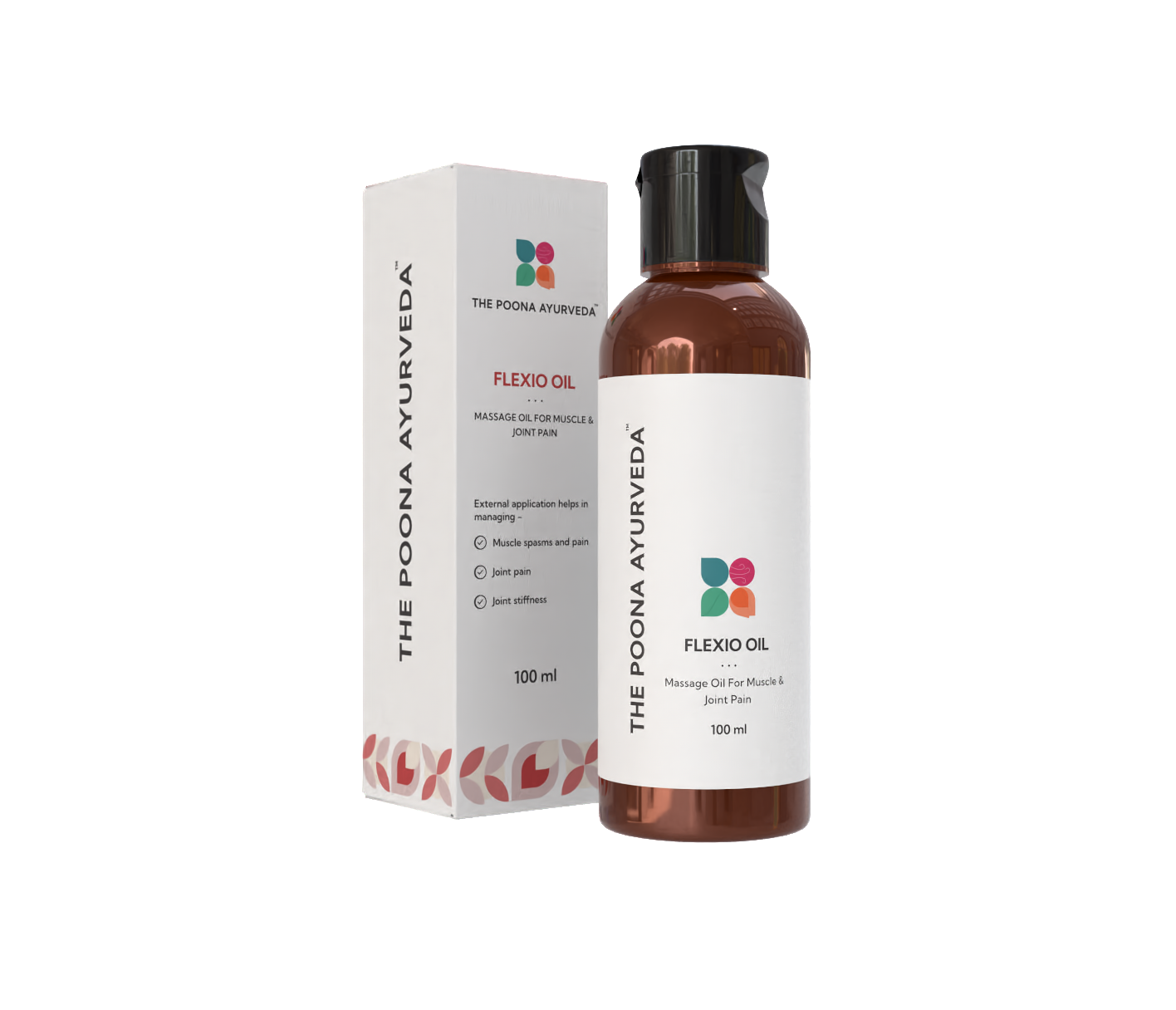
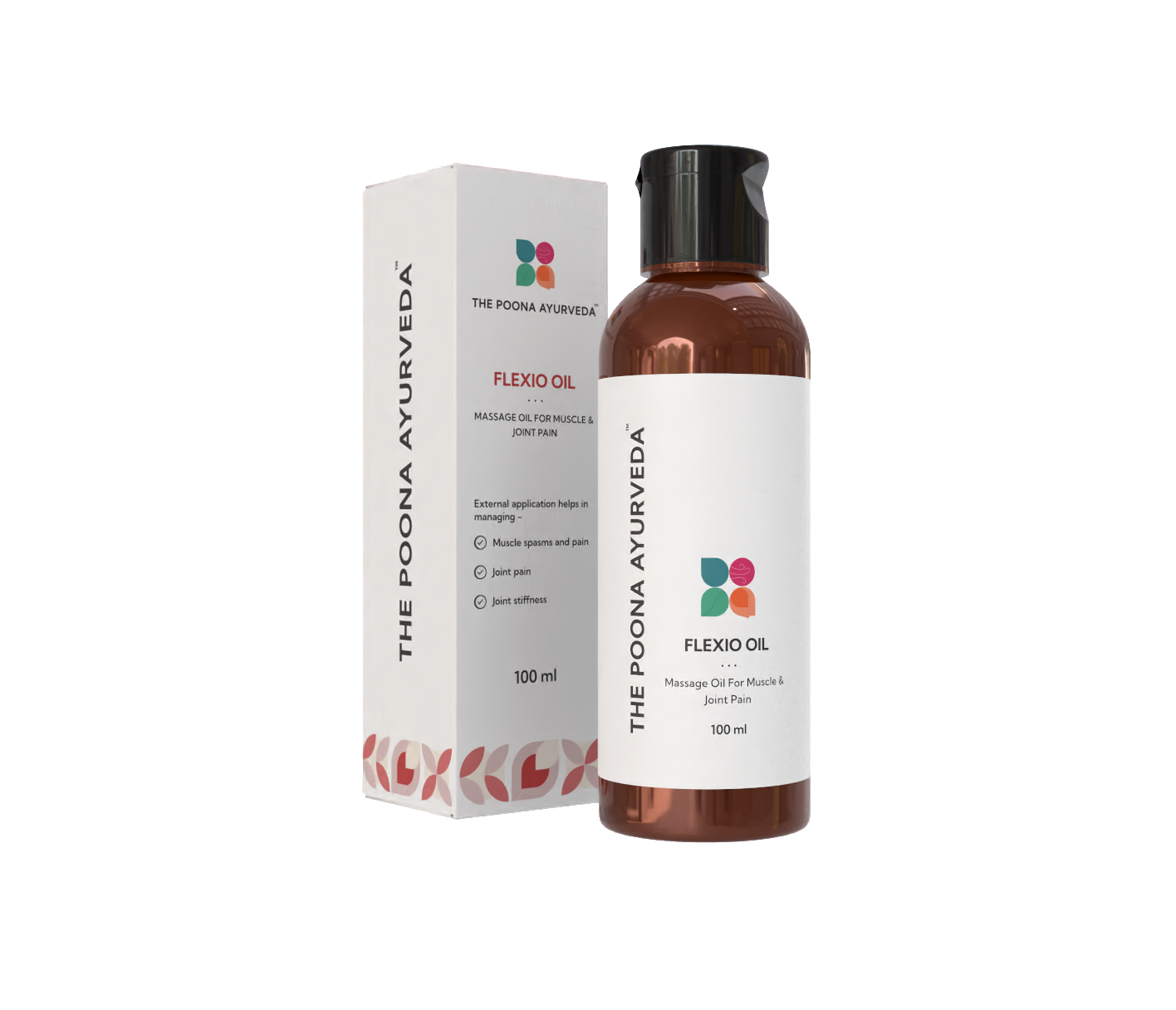
The best Ayurvedic oil for joint pain is a classical, multi-herb blend led by Nirgundi (Vitex negundo) in a sesame oil base, with its ingredients clearly stated and a simple twice-daily massage routine. Single-herb oils and undisclosed "secret blends" are weaker bets. Among ready-made options, a formulated oil such as Flexio Oil, built on the classical Mahavishagarbha and Panchaguna Tailam preparations, meets these criteria and saves you from mixing your own. For severe or persistent joint pain, pair any oil with proper medical advice.
Why joint pain happens, and where Ayurveda fits
Joint pain usually comes from wear, strain, or stiffness building up over time, and a massage oil supports comfort rather than fixing the underlying cause. Before choosing an oil, it helps to understand what you are actually managing.
Most everyday joint pain in India has a handful of common drivers. Age and ordinary wear gradually thin the cushioning in joints like the knee. Sedentary work, long hours at a desk, and little movement leave the muscles around a joint weak and tight. Carrying extra weight loads the knees and hips harder with every step. Old injuries flare up years later. And cold or damp weather tends to make stiff joints feel worse, which is why many people notice their knees first thing on a winter morning.
Ayurveda has its own way of describing this. In classical terms, joint and muscle stiffness is often linked to aggravated vata, the principle governing movement and dryness in the body, and sometimes to ama, the residue of poor digestion. Warm-oil massage, called abhyanga, is one of the oldest parts of the Ayurvedic daily routine (dinacharya), traditionally used to bring warmth and lubrication to the joints and to settle vata. This is tradition, not a clinical claim: the value of a daily oil massage is in steady, gentle care, not an overnight fix.
It is worth being honest about limits. An oil supports comfort and mobility as part of a routine; it does not regrow cartilage or cure arthritis. If your pain is severe, came on suddenly, follows an injury, comes with swelling, redness, or fever, or simply keeps getting worse, see a doctor or a qualified Ayurvedic vaidya rather than relying on an oil alone. Used sensibly, a good joint oil is a daily-comfort habit that sits alongside proper medical care, not instead of it.
What to look for in an Ayurvedic joint-pain oil
Five things separate an oil that genuinely supports joint comfort from one that is mostly packaging. Use them as a checklist before you buy, because most of the difference between oils lives here.
Does it lead with Nirgundi and classical joint herbs?
The single most important factor is the lead herb, and for joints that herb is Nirgundi. Nirgundi (Vitex negundo) is described across classical Ayurvedic texts, including the Bhavaprakasha Nighantu, as a herb for joint and muscle comfort, which is why almost every serious joint oil is built around it. It is traditionally valued for easing stiffness and swelling around a joint.
A good blend rarely stops at one herb. Alongside Nirgundi, classical joint oils usually carry herbs like Rasna (Pluchea lanceolata), long used for ease of movement; Devdaru (Cedrus deodara), used in muscular preparations; Shunthi (dry ginger), a warming herb that supports circulation to the area; and Ashwagandha (Withania somnifera), traditionally used to support the muscles around a joint. If the lead herb is not even named, or the oil is just a fragrance with a wellness label, treat that as a red flag.
| Herb | Botanical name | Traditional Ayurvedic use |
|---|---|---|
| Nirgundi | Vitex negundo | Joint and muscle comfort; the lead herb in most classical joint oils |
| Rasna | Pluchea lanceolata | Traditionally used for stiffness and ease of movement |
| Devdaru | Cedrus deodara | Used in classical preparations for muscular comfort |
| Shunthi | Zingiber officinale | Dry ginger, warming, used to support circulation to the joint |
| Ashwagandha | Withania somnifera | Traditionally used to support the muscles around a joint |
| Til (sesame) | Sesamum indicum | The classical base oil; warming and easily absorbed |
Is it a classical blend or a single-herb oil?
A classical multi-herb blend generally does more for joints than a single-herb oil. Ayurveda rarely relies on one herb in isolation, because the tradition treats a formulation as a whole, where warming, soothing, and circulation-supporting herbs work together. Classical tailam (medicated oil) preparations cook several herbs into a base oil over hours so their actions combine, which is why named formulations like Mahavishagarbha Tailam and Panchaguna Tailam have stayed in use for generations. A jar of plain sesame oil has its place, but a properly formulated blend is doing more of the work for joint and muscle comfort.
What is the base oil, and will it absorb?
The base oil matters as much as the herbs, and sesame (til) is the classical choice. Sesame oil is warming, penetrates well, and carries the herbal actions into the tissue, which is why it is the traditional base for joint and muscle oils in Ayurveda. A good joint oil absorbs in a few minutes of massage rather than sitting greasy on the skin. If an oil never seems to sink in and just leaves a film, the base was likely chosen for cost, not for the job, and you will use less of it because it feels unpleasant.
Are the ingredients actually disclosed?
Trust starts with transparency, so favour oils that name their formulation and herbs over ones that hide behind a "proprietary blend." For a product you rub into your skin two or three times a day, you deserve to know what is in it and which classical preparation it is based on. An oil that states it is built on Mahavishagarbha and Panchaguna Tailam is telling you something checkable; an oil that says only "ancient secret herbs" is telling you nothing. Disclosure of the herbs, the base, the pack size, and basic licensing is a sign the maker stands behind the product.
Is it easy to use, and made for India?
Daily use only happens if the oil is simple to apply and easy to reorder. The best Ayurvedic oil is the one you will actually use every day, so practicality counts: a clear how-to-use direction, a sensible 100ml bottle that lasts a few weeks of twice-daily use, honest rupee pricing, and reliable shipping with cash on delivery still matter to most Indian buyers. A wonderful formula you cannot conveniently reorder, or that arrives in a leaky bottle, is not the best joint pain relief oil in India for you.
What to avoid: red flags in joint oils
A few warning signs reliably mark out an oil worth skipping, and spotting them saves money and disappointment. This is the honest other half of the checklist.
- Undisclosed or "proprietary" blends. If the label will not tell you the main herbs and the base oil, assume there is a reason. You cannot judge what you cannot see.
- A single herb sold as a complete answer. Plain camphor or wintergreen oils give a strong cooling or warming hit that feels like it is working, but a one-note oil is not the same as a classical joint formulation.
- Cure language. Any oil promising to "cure arthritis", give "permanent relief", or work "100%" is overclaiming. Honest Ayurvedic copy talks about support, relief, and comfort, because that is what an external oil genuinely offers.
- Greasy, non-absorbing bases. Cheap mineral or heavily perfumed bases sit on the skin. You want a warming oil that massages in.
- No batch, manufacturing, or licence details. Reputable Indian Ayurvedic products carry basic manufacturing and licensing information. Its absence is a quiet red flag.
None of this requires naming or running down other brands. Judge any oil on these points yourself, and most of the marketing noise sorts itself out.
Best oil for each kind of joint pain: knee, back, shoulder
The same Nirgundi-led classical oil suits most joint and muscle pain; what changes is the area and the massage technique, not the oil. A general joint and muscle oil like Flexio Oil is used across all of the common trouble spots.
For knee joint pain, apply the oil around the kneecap and behind the knee, then massage with slow circular strokes. Knees carry your body weight and stiffen early in cold weather, so a warm-oil massage morning and evening tends to help most here. The knee is the joint most people have in mind when they look for a joint pain oil.
For lower-back and hip stiffness, warm a slightly larger amount and use longer strokes along the muscles on either side of the spine and over the hip, rather than pressing on the spine itself. Desk workers and anyone on their feet all day feel this most.
For shoulder and neck stiffness, use smaller amounts and gentler strokes, working the oil into the muscle from the base of the neck across the shoulder. These areas are sensitive, so go lighter and slower.
For general aches and muscle fatigue after exertion or a long day standing, a full-area massage before a warm bath is the traditional routine. Across all of these the oil is the same; only your hands change what they do.
Ready-made formulated oil vs making your own
Both a homemade warm-oil massage and a ready-made blend have a place; the difference is consistency and convenience. Warming plain sesame oil and massaging it into a stiff knee is a genuine, traditional practice, and there is nothing wrong with it as a starting point.
The catch is consistency. Getting classical herb proportions right at home is hard, the result varies batch to batch, sourcing good Nirgundi is not simple, and the slow cooking a proper tailam needs is more effort than most people will repeat. In practice, most people who set out to make their own give up within a week or two, which is the opposite of the daily habit a joint oil needs.
A ready-made classical blend solves the practical problems. The herbs are already cooked into the base in fixed proportions, every bottle is the same, and there is nothing to prepare beyond warming the oil slightly. For a daily routine you intend to keep up for weeks, that consistency is usually what decides whether the habit sticks. If you do want to try the homemade route, do it honestly as an experiment, then move to a formulated oil when you want a reliable, repeatable result.
Our recommendation
For most people who want a ready-made, formulated option, Flexio Oil meets the criteria above. It is built on two classical preparations, Mahavishagarbha Tailam and Panchaguna Tailam, combined in fixed proportions, with Nirgundi-led joint and muscle herbs in a sesame base. It is made for external massage, comes as a 100ml bottle at ₹390, and ships across India with cash on delivery available.
Where it fits best: people who want a single, consistent oil for everyday joint and muscle stiffness, across the knee, lower back, shoulder, and neck, without mixing their own. It checks the boxes from the checklist above, a Nirgundi-led classical blend, in a sesame base, with its formulation disclosed, in a practical bottle for daily Indian use.
It is a daily-care oil, used as a massage to support comfort and mobility, not a painkiller and not a substitute for treating a diagnosed joint condition. If your pain is severe, sudden, or steadily worsening, see a doctor or Ayurvedic vaidya, and use the oil alongside their advice rather than instead of it. Used honestly, as a consistent twice or thrice daily massage, it does the job a good Ayurvedic joint oil is meant to do. You can see the full ingredients and directions on the Flexio Oil product page.
How to use Ayurvedic joint oil the right way
A simple, repeatable routine matters more than the amount of oil you use. Here is the basic abhyanga (oil massage) method most Ayurvedic joint oils follow:
- Warm the oil slightly. Stand the bottle in warm water for a minute, or warm a small quantity in your palm. Warm oil absorbs and soothes better than cold, and the warmth itself is part of why the massage helps.
- Apply enough to cover the joint. Take an adequate amount onto the affected area, such as the knee, lower back, shoulder, or neck. A little more for large areas like the back, a little less for the neck.
- Massage gently until absorbed. Use slow, circular strokes for three to five minutes, working the oil in rather than just coating the skin. Around a joint, work the muscle on either side, not just the bone.
- Leave it on a while if you can. Many people apply before a warm bath or shower, so the oil has time to settle and the warm water afterwards helps it sink in.
- Repeat two to three times a day. For Flexio Oil, apply 2 to 3 times daily and use regularly. Consistency over several weeks is what supports lasting comfort, not a single heavy application.
A few precautions, because external oils still deserve care. Do a patch test on the inner forearm before first use and wait a day to check for any reaction. Keep the oil away from the eyes and off broken or irritated skin. It is for external use only, never to be swallowed. Pregnant or breastfeeding women, children, and anyone managing a medical condition or on medication should check with a doctor or Ayurvedic vaidya before starting. And if the pain is severe or persistent, treat the oil as support, not a solution, and get it looked at.
The bottom line
Choosing the best Ayurvedic oil for joint pain comes down to a short, honest checklist: a Nirgundi-led classical blend, in a sesame base, with disclosed ingredients, that is easy to use every day and easy to reorder in India. Understand what is driving the pain, avoid the red flags, match the massage to the area, and use the oil consistently rather than expecting a quick fix. Single-herb oils and undisclosed blends are weaker bets, and no oil should be sold to you as a cure. Among ready-made options, Flexio Oil meets these criteria, which is why it is our recommendation as a daily joint and muscle massage oil. Pick an oil that fits the checklist, use it consistently, and pair it with medical advice when the pain warrants it.
Last reviewed: June 2026