A dust allergy is one of the most common everyday complaints in Indian homes, and it rarely shows up at a convenient time. The first dusting of a room, opening a long-shut cupboard, or the change of season sets off a run of sneezes, a blocked or running nose, and itchy, watery eyes. Most people want to know how to cure dust allergy naturally, and the honest starting point is this: you can manage it well and reduce how often it flares, but no Ayurvedic habit or product removes the underlying sensitivity for good. This guide explains why a dust allergy happens, how Ayurveda understands it, and the daily habits, herbs, and routines that genuinely support clearer, more comfortable breathing.
The honest position matters here, because the category is full of "permanent cure" promises that no one can keep. What Ayurveda offers instead is a sensible, time-tested approach: reduce the triggers, support your digestion and immunity, and keep the respiratory passage clear, as a consistent daily routine. None of it replaces a doctor when symptoms are serious. Once you understand the pieces, managing a dust allergy at home gets a lot more practical.
Quick answer: managing a dust allergy naturally
No remedy cures a dust allergy permanently, in Ayurveda or modern medicine, because it is the immune system's sensitivity to dust and dust mites. What works is consistent management on a few fronts at once:
- Cut the dust at its source. Wash bedding weekly in hot water, dust with a damp cloth, and air out rooms. This does more than anything taken by mouth.
- Support the body with traditional herbs. Tulsi, haldi (turmeric), ginger, and yashtimadhu are used in Ayurveda to ease a running nose, sneezing, and congestion.
- Keep the nasal passage clear. Steam inhalation and, where it suits you, jala neti (a saline nasal rinse) help flush dust and mucus.
- Add daily Ayurvedic support if you want a ready option. A formulation like AllerGenie is taken alongside these habits, as support, not a cure.
- See a doctor if symptoms are severe, include wheezing or breathlessness, or do not settle.
The sections below explain why a dust allergy happens, how Ayurveda understands it, and exactly how to use each of these steps.
What a dust allergy actually is
A dust allergy is your immune system overreacting to harmless particles in household dust, most often the droppings of dust mites, along with pollen, mould spores, and pet dander. When you breathe these in, the body treats them as a threat and releases histamine, which causes the familiar sneezing, running nose, congestion, and itchy eyes. It is a sensitivity, not an infection, which is why it returns whenever you meet the trigger again.
Indian homes give dust plenty of places to gather: bedding and pillows, soft furnishings, curtains, carpets, stored clothes, and the fine dust that settles through dry months and construction-heavy areas. Humidity and poor ventilation make it worse, since dust mites thrive in warm, slightly damp bedding. This is why so many people notice symptoms first thing in the morning, or right after cleaning, when dust is stirred into the air.
Understanding this changes the goal. Because the reaction depends on exposure, the most useful thing you can do is reduce contact with the trigger. No herb or tablet works as well as simply having less dust around you. Everything Ayurvedic that follows supports the body and eases symptoms, but it sits on top of that foundation of dust control, not in place of it.
The Ayurvedic view of dust allergy
Ayurveda, the traditional Indian system of medicine overseen by the Ministry of Ayush, does not use the word allergy, but it describes the symptoms precisely under conditions called Pratishyaya (running nose and cold-like symptoms) and Peenas (chronic nasal congestion and sinus trouble). Repeated sneezing, watery discharge, a heavy blocked head, and congestion are read mainly as a sign of aggravated Kapha, the principle governing moisture and heaviness in the body, often with some Vata involvement that drives the sneezing and dryness.
In the classical view, two other things matter in the background. The first is agni, or digestive fire: when digestion is weak, the body produces ama, a kind of undigested residue that is thought to clog the channels and leave a person more reactive. The second is bala, the body's resilience or immunity. So the Ayurvedic approach to a dust allergy is not only about the nose. It works on three fronts at once: reduce the Kapha-aggravating triggers, support good digestion so less ama forms, and strengthen day-to-day resilience.
This is also why Ayurveda frames the goal as management rather than cure. The texts describe ways to pacify the aggravated dosha and clear the passages, used as an ongoing routine. They do not claim to switch off the underlying sensitivity. That honest framing is worth holding on to, because it sets realistic expectations: consistent care that keeps you comfortable, not a single fix that ends the allergy forever.
Daily habits that reduce dust allergy flare-ups
The single most effective natural step is cutting down the dust you live with, and most of it costs nothing. Treat these as the base of the whole approach.
- Wash bedding weekly in hot water. Dust mites live in pillows, sheets, and mattresses. A hot wash once a week clears most of them. Sun-dry bedding when you can, since heat and sunlight help.
- Dust with a damp cloth, not a dry one. Dry dusting and dry sweeping throw dust into the air for you to breathe. A damp cloth and a wet mop trap it instead.
- Air out and de-clutter rooms. Open windows for a while each day for ventilation, and keep soft toys, piled fabrics, and clutter down, since each is a dust trap.
- Cover the nose while cleaning. Wear a simple cloth mask or scarf when dusting, sweeping, or opening long-closed cupboards, the moments dust spikes the most.
- Watch the bedroom especially. You spend a third of your day there. Mite-proof pillow covers, fewer carpets, and clean bedding make the biggest difference to morning symptoms.
These habits do the heavy lifting. The herbs and routines below support your body, but they work far better in a home where the dust load is already lower.
Ayurvedic herbs and home remedies that support relief
Several common kitchen and Ayurvedic herbs are traditionally used to support the respiratory passage and ease the sneezing, congestion, and running nose of a dust allergy. They are used as part of daily diet and routine, not as a cure, and they suit ongoing, gentle use.
| Herb | Botanical name | Traditional Ayurvedic use |
|---|---|---|
| Tulsi | Ocimum sanctum | Holy basil, traditionally used to support the respiratory tract and ease a running nose and cough |
| Haldi | Curcuma longa | Turmeric, a warming herb traditionally used to support the body's response to irritation |
| Shunthi | Zingiber officinale | Dry ginger, warming, traditionally used to support clear breathing and digestion |
| Yashtimadhu | Glycyrrhiza glabra | Licorice, traditionally used to soothe the throat and respiratory passage |
| Kalonji | Nigella sativa | Black cumin, traditionally used in support of the nasal and respiratory passages |
A few simple ways these are used at home:
- Tulsi and ginger as a warm drink. Boil a few tulsi leaves and a little crushed dry ginger in water, and sip it warm. A warm drink is soothing and is a traditional way to ease congestion and throat irritation.
- Turmeric in warm milk or food. Haldi taken daily in cooking, or as a pinch in warm milk at night, is one of the oldest household habits for general resilience through dusty, changeable weather.
- Steam inhalation. Breathing in steam, plain or with a little tulsi, helps loosen congestion and clear the nasal passage. Keep a safe distance from the hot water and keep your eyes closed.
- Warm water through the day. Sipping warm rather than cold water suits a Kapha-type congestion and keeps the throat comfortable.
- Honey, used sensibly. A little honey is a traditional soother for the throat. Avoid giving honey to children under one year.
These remedies are gentle and supportive. They ease symptoms and make dusty days more comfortable; they do not remove the allergy, and they are most useful as a steady daily habit rather than a one-off.
Jala neti: clearing the nasal passage
Jala neti, rinsing the nasal passages with warm saline water using a neti pot, is one of the most useful traditional practices for dust-related congestion. It physically flushes dust, pollen, and mucus from the nose, which is why many people find it clears a blocked head and eases sneezing better than anything taken by mouth.
The basics: use a clean neti pot, lukewarm water (not hot), and the right amount of non-iodised salt so it feels like mild tears, not stinging. Tilt the head, pour into the upper nostril, let it drain from the lower one, then gently blow the nose clear. It is best learned properly the first time, ideally shown by someone who practises it, rather than from text alone.
A few cautions. Always use clean, previously boiled and cooled or filtered water, never untreated tap water. Do not force it, and skip jala neti if you have a nasal injury, frequent nosebleeds, or an ear infection, and check with a doctor first if you are unsure. Done correctly and regularly, it is a simple, drug-free way to keep the nasal passage clear through dusty seasons.
Where AllerGenie fits as Ayurvedic support
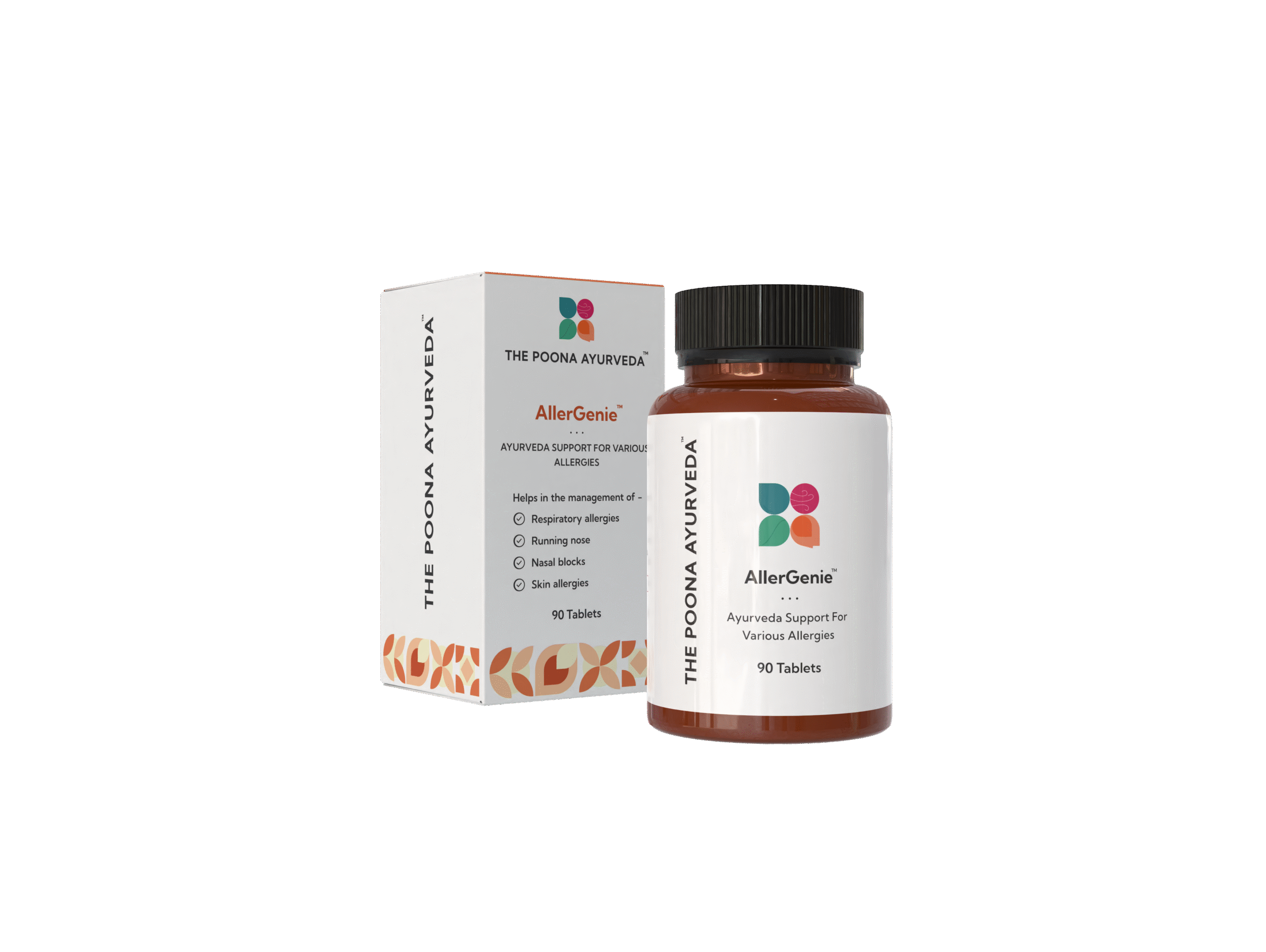
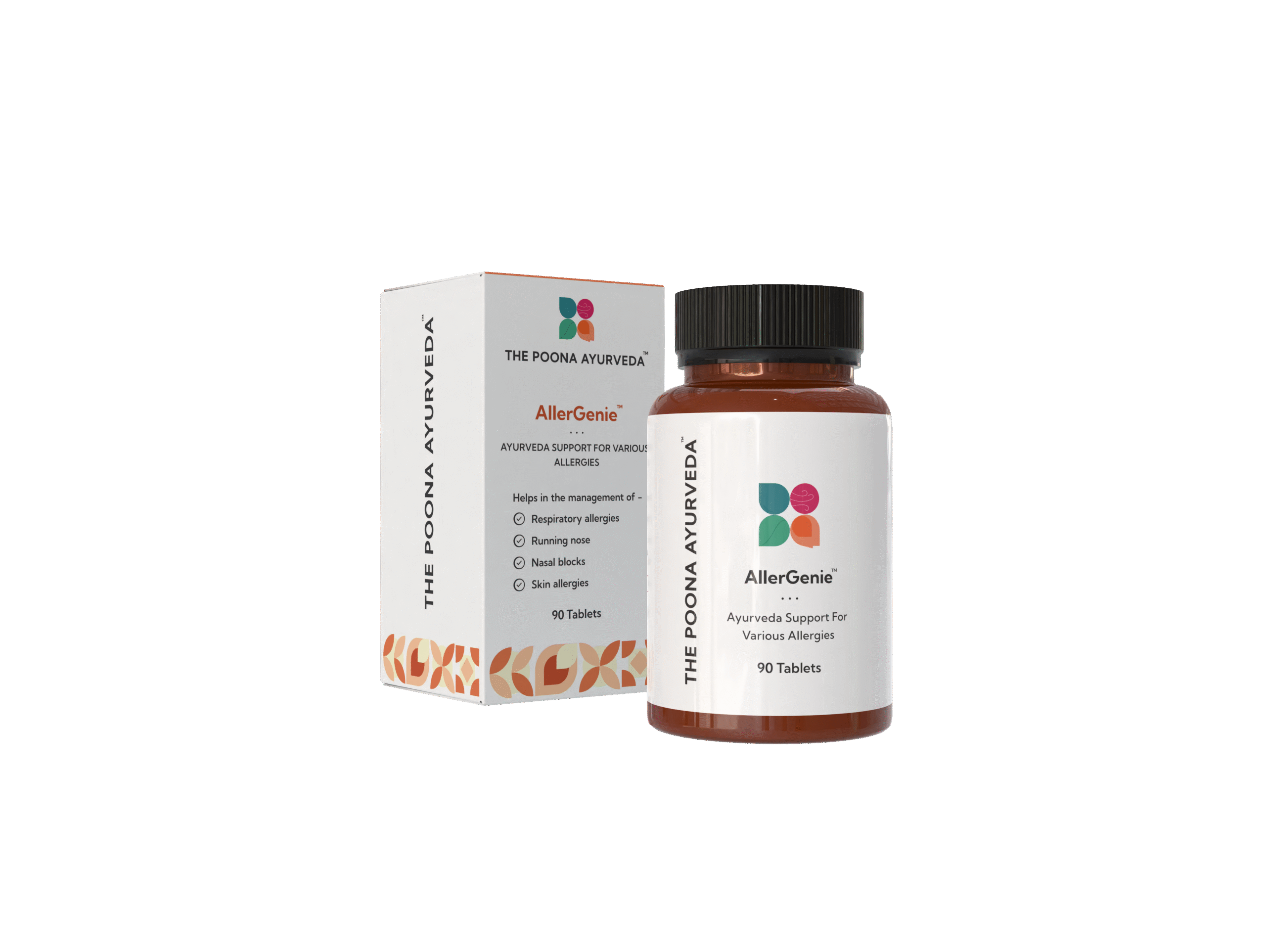
For people who want a ready-made Ayurvedic option to take daily alongside these habits, AllerGenie is our allergy support tablet, formulated for exactly this kind of ongoing, gentle use. It is positioned honestly: a support for managing allergy symptoms as part of a routine, not a cure for the allergy and not a replacement for medical care.
AllerGenie brings together classical Ayurvedic ingredients used in support of the respiratory passage, including Shitivar (Celosia argentea) as the lead herb, in a convenient tablet. In Ayurvedic terms it is used in the context of Pratishyaya, Kasa, and Peenas, the same conditions described earlier. The usual way to take it is 1 to 2 tablets with warm water twice a day, with or after meals, or as directed by your physician.
Where it fits best: people who already keep their home dust under control and want a consistent daily Ayurvedic support to take, rather than assembling several home remedies each day. It suits those with recurring seasonal sneezing, a running nose, or nasal congestion who prefer a ready formulation. Anyone pregnant or breastfeeding, giving it to a child, on other medication, or managing a health condition should check with a doctor or Ayurvedic vaidya before starting. You can see the full ingredients and directions on the AllerGenie product page.
Can a dust allergy really be cured? An honest answer
No, a dust allergy cannot be cured permanently, and any product or practice that promises otherwise is overpromising. The allergy is your immune system's learned sensitivity to dust and dust mites, and neither Ayurvedic herbs nor modern medicines erase that sensitivity for good. This is the honest answer that a lot of "permanent cure" content avoids giving.
What is genuinely achievable is good control. With less dust around you, supportive daily habits, and a body whose digestion and resilience are looked after, flare-ups can become less frequent and less intense, and many people go long stretches feeling comfortable. That is a realistic and worthwhile goal, and it is what the Ayurvedic approach is built to deliver: steady management, not a miracle.
It also helps to know when home care is not enough. If a dust allergy comes with wheezing or breathlessness, disturbs your sleep, brings on a fever, or simply will not settle, see a doctor. Dust allergies can overlap with asthma and sinus infections that need proper assessment. Ayurvedic habits and a support like AllerGenie sit alongside that medical care, never as a substitute for it.
The bottom line
Managing a dust allergy naturally comes down to a clear, honest approach rather than a search for a cure. Reduce the dust at its source first, since that does more than anything else. Support your body with traditional herbs like tulsi, haldi, ginger, and yashtimadhu, keep the nasal passage clear with steam and, where it suits you, jala neti, and look after digestion and daily resilience the Ayurvedic way. For a ready daily option, AllerGenie offers Ayurvedic support to use consistently alongside these habits. No oil, herb, or tablet cures a dust allergy outright, so be wary of anyone who says it does, and bring in a doctor whenever symptoms are severe or persistent. Used together and kept up over time, these steps make dusty days far more comfortable to live with.
Last reviewed: June 2026